
Picture this: You’ve finally decided to transform that overgrown section of your property into something beautiful and functional. You’ve contacted Big Frog Forestry Mulching, received your quote, and scheduled your project. Now you’re wondering—what do I need to do before the crew arrives?
If you’re a property owner in North Georgia’s tri-state area preparing for a forestry mulching project, you’re not alone in asking this question. Proper preparation can make the difference between a smooth, efficient project and one that encounters unnecessary delays or complications.
The good news? Preparing for forestry mulching is straightforward when you know what to expect. In this comprehensive guide, we’ll walk you through everything you need to do to prepare your property for a successful land clearing project—from marking boundaries to understanding what happens after the mulcher leaves.
Why Proper Preparation Matters for Your Forestry Mulching Project
Before we dive into the step-by-step preparation process, it’s important to understand why taking time to prepare your property actually benefits you.
Project Efficiency and Timeline Accuracy
When your property is properly prepared, forestry mulching crews can work more efficiently. Clear boundaries, marked obstacles, and identified access points mean less time spent figuring out logistics and more time transforming your land. This efficiency often translates to completing your project on schedule—or even ahead of it.
Better Results That Match Your Vision
Preparation ensures that the final result matches what you envisioned. By clearly communicating which trees to preserve, which areas to clear, and what your ultimate goals are, you help the crew deliver exactly what you want. There’s nothing worse than watching a beautiful shade tree get mulched because it wasn’t properly marked.
Cost Savings and Avoiding Surprises
Proper preparation can help you avoid unexpected costs. When underground utilities are marked, access routes are clear, and obstacles are identified upfront, you eliminate the risk of equipment damage, utility strikes, or project delays that could increase your final bill.
Safety for Everyone Involved
Perhaps most importantly, preparation creates a safer work environment. Identifying hazards like hidden stumps, wire fencing, or unstable terrain before equipment arrives protects both the crew and your property from potential accidents.
Step 1: Define Your Project Goals and Boundaries
The foundation of any successful forestry mulching project starts with clarity about what you want to accomplish.
Determine What You Want to Accomplish
Take time to walk your property and think through your specific goals. Are you creating a defensible space for wildfire prevention? Opening up a view of the Blue Ridge Mountains? Preparing land for new construction? Creating ATV or hunting trails? Clearing fence lines for better property definition? Your goals will influence how you prepare and what you communicate to your forestry mulching team.
Mark Boundaries Clearly
Once you know what areas need clearing, mark them clearly using:
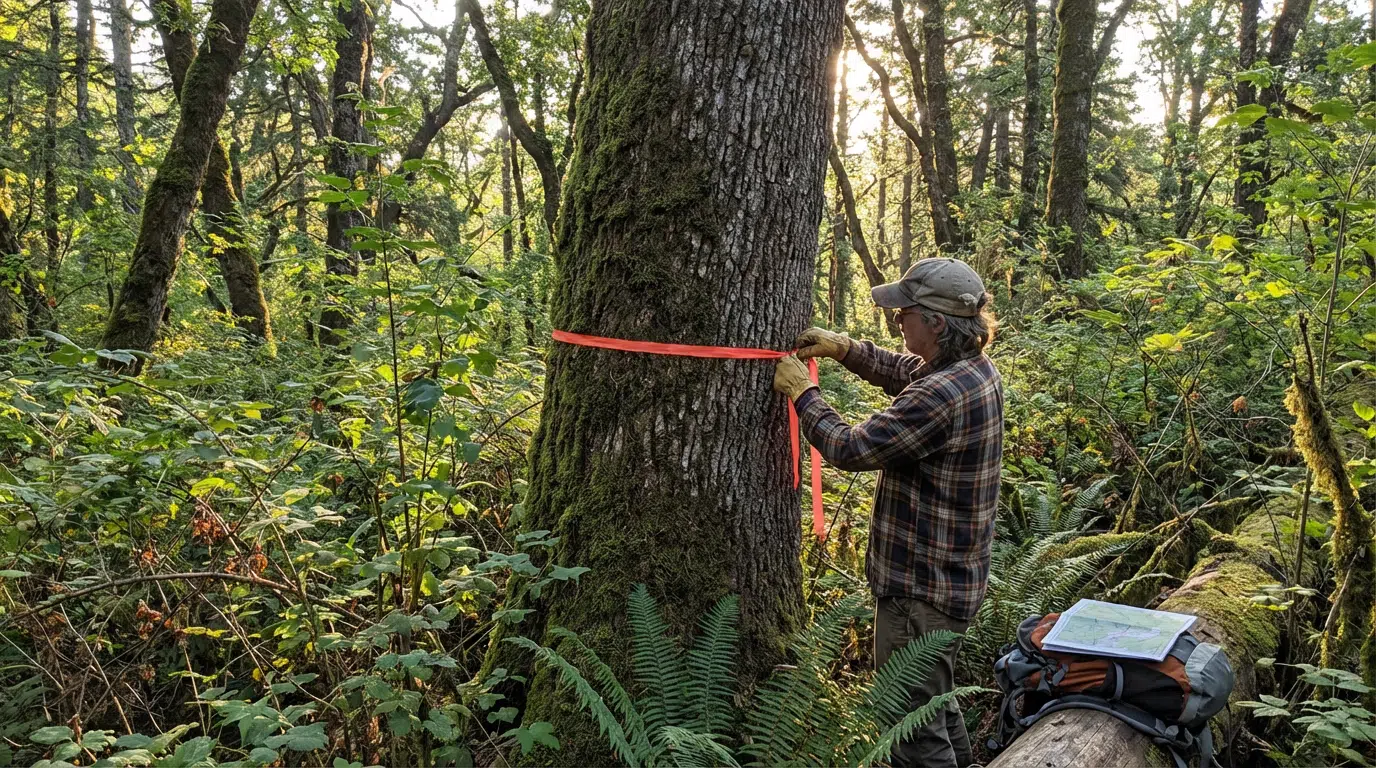
- Brightly colored flagging tape (orange or pink works best) tied to trees at the perimeter of the clearing area
- Wooden stakes with flagging tape for open areas without trees
- Biodegradable spray paint to mark lines on the ground (check with your contractor about color preferences)
- GPS coordinates if you’re working with a company that offers GPS-guided land clearing services
For properties in the mountainous terrain common around McCaysville, Blue Ridge, and Copper Hill, consider that boundaries may be harder to see once equipment is working. Mark generously and from multiple angles.
Identify Trees and Features You Want to Keep
This is critical. Walk through the area to be cleared and use a different color of flagging tape (blue is commonly used) to mark any trees, shrubs, rock formations, or other features you want preserved. Make these markings highly visible—wrap tape completely around the trunk at eye level, not just a single strand.
Consider marking “keeper” trees with multiple wraps or even painting a visible ring around the trunk. In the Blue Ridge Mountains, property owners often want to preserve mature hardwoods, flowering dogwoods, or specimen trees that add character to the land.
Document with Before Photos
Take comprehensive photos of your property from multiple angles before work begins. These serve several purposes:
- You’ll have a visual record of the property’s original condition
- You can compare before and after to fully appreciate the transformation
- Photos can help resolve any questions that arise during the project
- You’ll have documentation for insurance purposes if needed
Step 2: Clear Obstacles and Identify Hazards
Forestry mulching equipment is powerful and efficient, but it works best when the area is free of certain obstacles that could damage the machinery or create safety hazards.
Remove Portable Items from the Work Area
Walk through the clearing area and remove:
- Outdoor furniture, decorations, or planters
- Children’s play equipment
- Garden tools, hoses, or equipment
- Firewood piles or lumber stacks
- Anything else that could be damaged or could damage equipment
Even items you think are “out of the way” should be moved. Forestry mulching equipment needs room to maneuver, and operators need clear sightlines.
Identify and Mark Underground Utilities
This is non-negotiable. Before any land clearing project in Georgia, Tennessee, or North Carolina, you must have underground utilities marked. Call 811 at least 2-3 business days before your scheduled project start date. This free service will have utility companies come mark the locations of:
- Electric lines
- Gas lines
- Water lines
- Sewer lines
- Cable and phone lines
- Septic systems and drain fields
In rural areas of North Georgia, you may also have private utilities (well lines, propane lines, irrigation systems) that won’t be marked by 811. You’ll need to identify these yourself or hire a private locating service.
Note Structures, Fences, and Permanent Features
Make your forestry mulching team aware of:
- Property line fences (especially old wire fencing that may be buried in vegetation)
- Stone walls or rock features
- Culverts or drainage systems
- Foundations or remnants of old structures
- Retaining walls
- Established landscaping near the clearing zone
Old wire fencing is particularly common in the North Georgia mountains and can be hidden in decades of overgrowth. If possible, remove old fencing before the crew arrives, or at minimum, mark its location clearly.
Clear Debris That Could Damage Equipment
While forestry mulchers can handle most vegetation, certain items should be removed:
- Metal objects (old farm equipment, wire, posts with nails)
- Large rocks that aren’t naturally embedded in the ground
- Glass or ceramic items
- Construction debris or concrete chunks
- Trash or dumped materials
If you’re unsure whether something should be removed, take a photo and ask your contractor during the consultation phase.
Step 3: Communicate with Your Forestry Mulching Team
The best preparation happens through clear communication with the professionals who will be doing the work.
Schedule a Detailed Site Consultation
Before work begins, walk the property with your forestry mulching contractor. This is your opportunity to:
- Point out exactly what you want cleared and what you want preserved
- Ask questions about the process and timeline
- Discuss any concerns about terrain, access, or specific challenges
- Confirm that your understanding matches theirs
At Big Frog Forestry Mulching, we make site consultations a priority because we know that understanding your vision is essential to delivering results you’ll love. During this walkthrough, we can also identify any preparation steps you may have missed.
Discuss Access Points and Equipment Entry
Forestry mulching equipment needs to get to your property, and the machines used are substantial. Discuss:
- Which gate or entrance point the equipment will use
- Whether gates are wide enough (most forestry mulchers need 8-10 feet of clearance)
- Whether there’s adequate overhead clearance (low-hanging branches, power lines)
- If access roads or driveways can support the equipment weight
- Where equipment will be staged when not actively working
For properties in mountainous areas around Mineral Bluff or Morganton, steep driveways or narrow mountain roads may require special planning.
Share Concerns About Specific Areas
Be upfront about any concerns:
- Steep slopes or unstable terrain
- Areas with particularly dense vegetation
- Wet or muddy sections that might be problematic
- Neighboring properties where you want to be especially careful
- Wildlife considerations (active nests, dens, etc.)
Professional forestry mulching contractors appreciate this information because it helps them plan the most effective approach.
Confirm Project Scope, Timeline, and Weather Plans
Make sure you have clear answers to:
- How many days the project is expected to take
- What hours the crew will be working
- What happens if weather delays the project
- How you’ll be notified of progress or any issues
- What the property will look like at the end of each work day
Understanding the timeline helps you plan accordingly, whether that means arranging to be present, keeping pets secured, or notifying neighbors about temporary activity.
Step 4: Prepare Access Routes and Staging Areas
Getting equipment to your property efficiently is an often-overlooked aspect of preparation.
Ensure Clear Pathways for Equipment
The route from the road to your clearing area should be:
- Wide enough for equipment to pass (typically 10-12 feet)
- Free of low-hanging branches that could damage equipment
- Clear of obstacles like mailboxes, decorative rocks, or landscaping that could be damaged
- Accessible without crossing areas you don’t want disturbed
If the equipment needs to cross your lawn or landscaped areas, discuss this with your contractor. In some cases, temporary protective measures can minimize impact.
Check Gate Widths and Overhead Clearance
Measure your gates and entrance points. Most forestry mulching equipment needs:
- 8-10 feet of width clearance
- 10-12 feet of overhead clearance
- Stable, level ground for entry and exit
If your gate isn’t wide enough, you may need to temporarily remove fence sections. Plan this in advance rather than discovering it when equipment arrives.
Address Muddy or Soft Ground Conditions
North Georgia’s clay soil can become problematic after rain. If your property has:
- Low-lying areas that collect water
- Clay soil that becomes slick when wet
- Recently saturated ground from heavy rain
Discuss timing with your contractor. Sometimes waiting a few days for the ground to dry can prevent equipment from getting stuck or creating deep ruts. In some cases, laying temporary mats or gravel may be necessary for access.
Plan Equipment Staging Areas
Identify where equipment will be parked when not working:
- A level area near the work site
- Somewhere secure if equipment will be left overnight
- A location that won’t block your driveway or access
- An area where equipment won’t damage landscaping or utilities
Step 5: What to Expect During the Forestry Mulching Project
Understanding what will happen during the project helps you prepare mentally and practically.
Typical Timeline Based on Acreage
While every project is unique, here are general guidelines for forestry mulching in North Georgia:
- Small projects (under 1 acre): 1-2 days
- Medium projects (1-3 acres): 2-5 days
- Large projects (3-5 acres): 5-10 days
- Very large projects (5+ acres): 1-2 weeks or more
Dense vegetation, steep terrain, or challenging access can extend these timelines. Your contractor should provide a realistic estimate based on your specific property conditions.
Noise Levels and Working Hours
Forestry mulching equipment is industrial machinery and generates significant noise—typically 85-95 decibels, similar to a lawnmower or chainsaw. Most contractors work during standard business hours (typically 8 AM to 5 PM, Monday through Friday) to minimize disruption to neighbors.
If you have concerns about noise-sensitive neighbors, discuss timing with your contractor. Some property owners in residential areas around Blue Ridge or Ellijay prefer to notify neighbors in advance as a courtesy.
Weather Considerations and Scheduling Flexibility
Weather plays a significant role in land clearing projects. Forestry mulching typically cannot proceed during:
- Heavy rain (equipment can get stuck, and visibility is poor)
- Extremely muddy conditions
- Ice or snow (in winter months)
Most contractors build some weather flexibility into their schedules. Understanding that delays may occur helps set realistic expectations.
Communication During the Project
Establish how you’ll stay informed about progress:
- Daily check-ins by phone or text
- On-site visits to see progress (coordinated with the crew for safety)
- Photos or videos of completed sections
- Immediate notification of any unexpected issues
Professional contractors maintain open communication throughout the project, ensuring you’re never wondering what’s happening with your property.
Step 6: Post-Project Care and What Your Property Will Look Like
Understanding what to expect after forestry mulching helps you plan for the next phase of your property improvement.
What the Mulched Area Will Look Like Initially
Immediately after forestry mulching, your property will be covered with a layer of organic mulch—finely shredded vegetation from the trees, brush, and undergrowth that was cleared. This mulch layer is typically 2-6 inches deep and creates a natural, earthy appearance.
Don’t be surprised if the area looks rougher than you expected at first. The mulch needs time to settle and begin decomposing. Within a few weeks, the appearance will soften considerably as the mulch compacts and weathers.
The Natural Settling and Decomposition Process
Over the following months, the mulch layer will:
- Compact and settle to about half its original depth
- Begin decomposing, enriching the soil below
- Darken in color from fresh tan/brown to rich dark brown
- Start integrating with the existing soil
This process is one of the environmental benefits of forestry mulching—the organic material returns nutrients to the soil rather than being hauled away or burned.
Erosion Control Benefits
One of the immediate advantages you’ll notice is erosion protection. The mulch layer:
- Holds soil in place on slopes (crucial in mountainous North Georgia terrain)
- Absorbs rainfall, reducing runoff
- Protects against soil compaction
- Maintains soil moisture during dry periods
This is particularly valuable on properties with steep terrain common around Copper Hill, McCaysville, and the surrounding Blue Ridge Mountains.
Long-Term Maintenance Recommendations
To keep your newly cleared area looking great:
- Monitor for regrowth: Some vegetation may sprout from roots left in the ground. Address unwanted regrowth early by pulling or spot-treating.
- Add seed or plantings: If you plan to establish grass, wildflowers, or intentional landscaping, wait 2-4 weeks after mulching to allow the area to settle.
- Maintain the mulch layer: In high-traffic areas, the mulch may thin over time. You can add supplemental mulch if needed.
- Plan for periodic maintenance: Depending on your goals, you may want to schedule periodic underbrush clearing every 3-5 years to maintain the cleared appearance.
Preparation Creates Success
Preparing your property for a forestry mulching project doesn’t have to be complicated, but taking these steps seriously makes a significant difference in your results. When you:
✓ Clearly define and mark your project boundaries
✓ Remove obstacles and identify hazards
✓ Communicate openly with your forestry mulching team
✓ Ensure clear access for equipment
✓ Understand what to expect during and after the project
…you set the stage for a smooth, efficient transformation of your property.
The few hours you invest in preparation can save days of project time, prevent costly mistakes, and ensure the final result matches your vision. Property owners throughout North Georgia’s tri-state area who take preparation seriously consistently report higher satisfaction with their forestry mulching projects.
Remember, professional forestry mulching contractors want your project to succeed as much as you do. They’re your partners in this transformation, and most are happy to answer questions, provide guidance, and help you prepare effectively.
Ready to Transform Your North Georgia Property?
If you’re preparing for a forestry mulching project in the tri-state area around McCaysville, Blue Ridge, Copper Hill, or anywhere within our service region, Big Frog Forestry Mulching is here to help.
We specialize in professional land clearing and forestry mulching services using top-of-the-line GPS-guided equipment. Our experienced team works with you from initial consultation through project completion, ensuring your property preparation goes smoothly and your results exceed expectations.
Ready to get started? Call us at (706) 851-3524 for a free consultation and quote. We’ll walk your property with you, answer all your questions about preparation, and provide a detailed plan for transforming your land.
Let’s work together to prepare your property for the transformation you’ve been envisioning. Your cleared, beautiful, functional land is just a phone call away.
0 Comments