
In the scenic mountains of North Georgia, the beauty of our forested landscapes comes with an inherent risk: wildfires. For property owners in McCaysville, GA and throughout the tri-state area, creating defensible space around homes and structures isn’t just a good idea—it’s an essential safety measure that can mean the difference between protection and devastation when wildfire threatens.
At Big Frog Forestry Mulching, we’ve helped countless property owners transform vulnerable land into protective barriers using our specialized forestry mulching services. This innovative approach to wildfire prevention combines efficiency, environmentally friendly practices, and lasting protection for your property.
Understanding Wildfire Risk in North Georgia
The Blue Ridge Mountains region, including McCaysville, faces unique wildfire challenges due to several factors:
- Dense forest ecosystems with significant fuel loads
- Seasonal drought conditions that increase fire risk
- Mountainous terrain that can accelerate fire spread
- Remote properties with limited access for emergency management teams
- Mixed forest types including highly flammable pine species
- Increasing climate change impacts affecting fire seasons
- Growing interface between residential areas and wildland (wildland-urban interface)
According to fire ecology experts, properties with properly maintained defensible space are significantly more likely to survive a wildfire event. Yet many homeowners in our region remain vulnerable due to overgrown vegetation too close to structures, creating dangerous fuel ladders that allow flames to climb from ground level to tree canopies and structures.
What is Defensible Space and Why Is It Critical?
Defensible space is the buffer zone you create between buildings on your property and the grass, trees, shrubs, or any wildland area that surrounds them. This space is essential for slowing or stopping the spread of wildfire and provides a safe area for firefighters to defend your home.
The concept of defensible space was developed by fire safety experts and forest management professionals who studied wildfire behavior and identified ways to reduce property damage during fire events. The effectiveness of these zones has been proven repeatedly during major wildfires in the United States, including those in similar mountainous regions.
The Science Behind Wildfire Behavior
Understanding how wildfires spread helps explain why defensible space works:
- Heat transfer occurs through convection, radiation, and direct contact
- Ember transport can carry fire over significant distances
- Wind dramatically affects fire intensity and direction
- Fuel ladders allow flames to climb from ground to canopy
- Vegetation density influences fire intensity and spread rate
- Topography affects fire behavior, with flames moving faster uphill
- Combustion rates vary by plant species and moisture content
By manipulating the available fuel through forestry mulching and creating strategic firebreaks, we can significantly alter fire behavior near structures.
The Three Zones of Defensible Space
Creating effective defensible space involves establishing three distinct protection zones around your structures, each with specific vegetation management requirements:
Zone 1: 0-30 feet from structures (The Immediate Zone)
This critical area requires the most rigorous vegetation management:
- Remove all dead vegetation and debris
- Keep tree branches trimmed at least 10 feet from other trees
- Remove branches hanging over your roof
- Keep poaceae (grass family plants) cut to a maximum height of 4 inches
- Create hardscape barriers where possible (gravel, pavers, etc.)
- Move firewood stacks to Zone 2 or 3
- Remove flammable materials from under decks and porches
- Consider fire retardant treatments for wooden structures
- Ensure proper spacing between landscape plants
- Replace highly flammable plants with fire-resistant native species
Zone 2: 30-100 feet from structures (The Intermediate Zone)
This area creates your essential firebreak:
- Maintain spacing between shrubs and trees
- Remove ladder fuels (vegetation that allows fire to climb from ground to tree canopy)
- Create islands of vegetation with space between them
- Keep grass mowed and vegetation well-maintained
- Thin trees to prevent canopy fires from spreading
- Remove highly flammable invasive species like Tamarix (salt cedar)
- Maintain access roads for emergency vehicles
- Reduce fuel continuity by creating strategic gaps
- Consider the placement of fence lines and ensure they won’t carry fire to structures
- Implement strategic mulch placement to reduce weed growth
Zone 3: 100-200 feet from structures (The Extended Zone)
This outer zone provides the first line of defense:
- Thin trees to create separation between canopies
- Remove smaller conifers growing between larger trees
- Clear heavy accumulation of fallen leaves and debris
- Create and maintain access roads for emergency vehicles
- Reduce overall fuel load while maintaining habitat value
- Focus on removing highly flammable species
- Maintain trails and access points for firefighter entry
- Consider strategic placement of water sources for fire engine access
- Implement forestry mulching to create wider firebreaks at property boundaries
- Maintain wildlife corridors while reducing fire risk
How Forestry Mulching Creates Effective Defensible Space
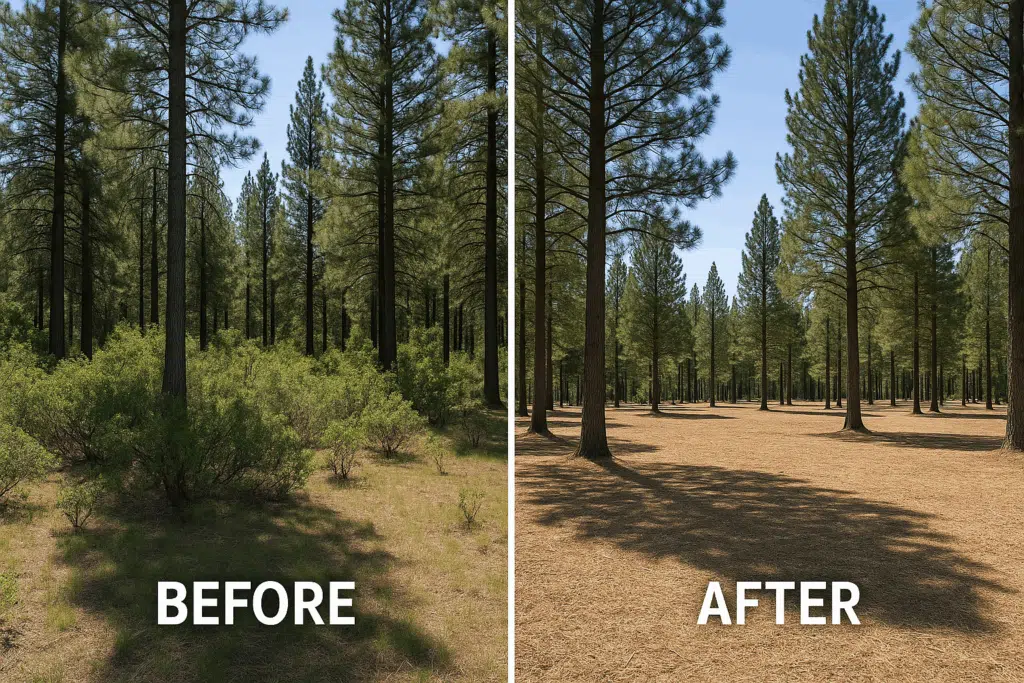
Traditional methods of creating defensible space often involve labor-intensive cutting, hauling away debris, or potentially hazardous controlled burns. Forestry mulching offers a revolutionary alternative that provides superior results with significant advantages:
1. Advanced Equipment for Efficient Clearing
The forestry mulching process relies on specialized heavy equipment designed specifically for vegetation management:
- Forestry mulchers with high horsepower capabilities
- Fecon mulchers and FAE mulchers for handling larger materials
- Mulching heads for excavators that provide precision in difficult terrain
- Mulching heads for skid steers for more accessible areas
- Tree mulchers capable of processing whole trees up to certain diameters
- Brush mulchers designed for dense undergrowth
- GPS-guided systems for precise firebreak creation
Unlike a simple mower or woodchipper, these specialized machines can handle everything from small brush to substantial trees, converting them to mulch in a single operation.
“The efficiency of our forestry mulching equipment compared to traditional clearing methods is remarkable,” explains our team at Big Frog Forestry Mulching. “What might take a crew with chainsaws and chippers several days can often be completed in hours, creating defensible space much more quickly.”
2. One-Step Clearing Process
Forestry mulching combines cutting, grinding, and clearing vegetation into a single efficient operation. Our specialized equipment can clear understory vegetation, small trees, and brush while simultaneously converting this material into beneficial mulch spread across the cleared area.
This integrated approach eliminates multiple steps required in traditional clearing:
- No need for separate cutting and removal crews
- Elimination of hauling costs and logistics
- No burning permits or controlled burn management
- Immediate distribution of organic matter back to the soil
- Reduced labor costs and project timeline
- Minimal disturbance to surrounding areas
3. Reduced Fire Fuel Without Burning
One of the most significant advantages of forestry mulching for fire prevention is that it eliminates the need for burning cleared vegetation—a practice that carries its own fire risk, especially in dry conditions common to McCaysville and surrounding areas.
The mulching process converts potential fire fuel into small wood chips spread thinly across the ground, where they:
- Decompose more quickly than larger debris through natural decomposition
- Hold moisture in the soil, reducing overall site dryness
- Create less flammable ground cover than dry brush
- Prevent soil erosion on sloped terrain common in our mountain region
- Reduce the presence of ladder fuels that allow fires to climb
- Minimize the chance of ember ignition compared to loose debris
- Contribute to soil health through the addition of organic matter
4. Selective Clearing Capabilities
Our forestry mulching equipment allows for precise, selective clearing that preserves desirable trees while removing fire-prone understory and smaller vegetation.
This selective approach means you can:
- Maintain privacy and shade from established trees
- Preserve specimen trees that add value to your property
- Remove specific invasive species or highly flammable vegetation
- Create aesthetically pleasing clearings that enhance property value
- Maintain important wildlife habitat features
- Protect valuable lumber species for future harvest
- Preserve native species that support local ecology
- Create a more park-like landscape around your home
5. Environmental Benefits Beyond Fire Protection
Unlike bulldozing or other intensive clearing methods, forestry mulching offers significant environmental advantages:
- Soil preservation: The root systems remain intact, preventing erosion on mountain slopes
- Nutrient cycling: The mulch returns organic matter to the soil, improving soil fertility
- Reduced equipment impact: Our machinery causes minimal soil disturbance
- No debris disposal: Everything is processed on-site, eliminating hauling and landfill impacts
- Habitat conservation: Selective clearing preserves important wildlife features
- Improved soil structure: Mulch addition enhances soil health and water retention
- Native species protection: Ability to target invasive species while preserving native species
- Biodiversity support: Creating varied habitat types can actually increase biodiversity
- Erosion control: Particularly important in mountainous terrain with significant rainfall
“The environmental benefits of forestry mulching align perfectly with our commitment to responsible land management,” notes our team. “We’re not just protecting properties from wildfire—we’re improving the overall ecosystem health of the land.”
Creating Firebreaks With Forestry Mulching
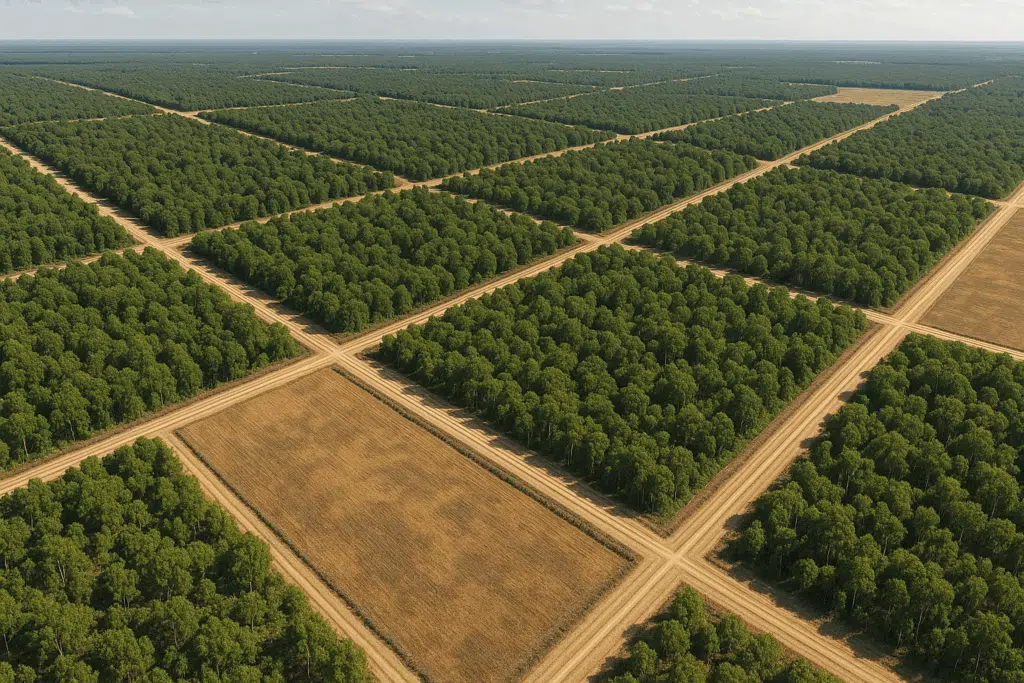
Beyond the immediate defensible space around structures, strategic firebreaks throughout larger properties provide essential protection during wildfire events. Forestry mulching is ideal for creating these critical barriers.
What Makes an Effective Firebreak?
A firebreak is a gap in vegetation or other combustible material that acts as a barrier to slow or stop the progress of a wildfire. Effective firebreaks share several key characteristics:
- Sufficient width based on surrounding vegetation and topography
- Reduced fuel load throughout the break area
- Minimal ladder fuels that could carry fire across the break
- Accessible for firefighter and fire engine entry
- Strategic placement considering prevailing winds and terrain
- Regular maintenance to prevent regrowth
- Consideration of natural barriers like roads, rivers, or rock outcroppings
- Proper erosion control measures, especially on slopes
Strategic Firebreak Placement
Effective firebreaks should be placed:
- Along property perimeters
- Following natural features like ridgelines
- Around valuable timber stands
- Alongside access roads and driveways
- Between different vegetation types or densities
- Near potential ignition sources
- At the top of slopes where possible (fire travels faster uphill)
- Creating compartments on larger properties
- Protecting critical infrastructure
Our team at Big Frog Forestry Mulching can assess your specific property characteristics and recommend optimal firebreak locations based on terrain, prevailing winds, and vegetation types common to the McCaysville area.
Firebreak Width Considerations
The appropriate width for firebreaks depends on several factors:
- Slope steepness (steeper slopes require wider breaks)
- Vegetation height and type
- Local fire history and risk factors
- Property size and configuration
- Prevailing wind patterns
- Fuel type and density
- Available resources for maintenance
For most North Georgia properties, we recommend firebreaks between 30-100 feet wide, with wider breaks on steeper slopes or areas with particularly dense or flammable vegetation. This width can be adjusted based on specific property conditions and risk assessment.
Maintenance Requirements for Effective Firebreaks
Creating firebreaks is not a one-time project. Regular maintenance is essential to ensure their effectiveness:
- Annual vegetation assessment before fire season
- Removal of fallen debris and leaves
- Control of regrowth through mulching or mowing
- Monitoring for invasive species establishment
- Evaluation of erosion issues, especially after heavy rainfall
- Assessment of tree growth that might bridge the gap
- Clearing of any new ladder fuels
- Maintenance of access points for emergency vehicles
The Forestry Mulching Process for Wildfire Prevention
When you choose Big Frog Forestry Mulching for creating defensible space and firebreaks, you can expect a comprehensive process designed to maximize fire protection while minimizing property impact:
1. Initial Property Assessment and Planning
Our process begins with a thorough evaluation of your property:
- Analysis of existing vegetation types and densities
- Identification of high-risk areas and natural features
- Assessment of structures and valuable assets
- Evaluation of access points for machinery and emergency vehicles
- Discussion of your specific goals and concerns
- Development of a customized wildfire prevention plan
- Consideration of local regulations and permit requirements
- Identification of protected species or sensitive areas
2. Equipment Selection and Preparation
Based on your property’s specific needs, we select the appropriate equipment:
- Fecon mulchers for larger clearing projects
- Bobcat mulchers for more precise work around structures
- Excavator with mulching head for challenging terrain
- Brush mulchers for dense undergrowth
- GPS-guided systems for precise firebreak creation
- Support vehicles for crew and maintenance
- Specialized tools for hand clearing when necessary
3. Execution of Clearing Operations
Our experienced operators implement the plan with precision:
- Establishment of primary defensible space zones
- Creation of strategic firebreaks
- Selective removal of high-risk vegetation
- Preservation of valuable trees and habitat features
- Mulching of cleared material to reduce fire hazards
- Careful work around structures and sensitive areas
- Continuous assessment and adjustment as needed
- Daily cleanup and organization
4. Final Assessment and Recommendations
Upon completion, we conduct a thorough review:
- Walk-through of cleared areas with property owner
- Documentation of completed work
- Recommendations for ongoing maintenance
- Education about wildfire prevention best practices
- Discussion of future vegetation management needs
- Provision of before/after documentation for insurance purposes
- Scheduling options for maintenance services
Seasonal Considerations for Wildfire Prevention in North Georgia
The risk of wildfire in McCaysville and surrounding areas varies throughout the year, with certain seasons requiring particular attention to defensible space maintenance:
Fall (September-November)
- Highest wildfire risk due to leaf drop and drier conditions
- Drought conditions often peak during this period
- Fuel accumulation from fallen leaves creates ground fire hazards
- Ideal time for creating new defensible spaces before winter
- Critical period for clearing accumulated leaves and debris
- Forestry mulching can help manage seasonal leaf fall
- Prescribed burns are often conducted during this season by professionals
- Firefighter resources may be stretched thin during peak fire season
Winter (December-February)
- Reduced undergrowth makes it easier to identify structural issues
- Better visibility for planning comprehensive clearing projects
- Excellent time for major firebreak establishment while plants are dormant
- Frozen ground may allow access to normally wet areas
- Reduced wildlife activity minimizes habitat disruption
- Dormant vegetation is easier to identify and selectively remove
- Invasive species often stand out when native species are dormant
- Cooler working conditions for heavy clearing operations
Spring (March-May)
- Important maintenance period before summer heat
- Time to address new growth and spring vegetation
- Good opportunity for follow-up clearing of winter debris
- Moisture levels typically higher, reducing immediate fire risk
- New growth can quickly create ladder fuels if not managed
- Spring winds can rapidly dry landscapes after rain
- Wildlife breeding season requires careful habitat consideration
- Good time for soil amendments following mulching operations
Summer (June-August)
- Monitoring period for fast-growing vegetation
- Maintenance of existing defensible spaces
- Special attention to drought-stressed areas that increase fire risk
- Lightning strikes become more common ignition sources
- Recreational activities like campfires increase human-caused fire risk
- Invasive species often thrive during summer months
- Heat can create challenging working conditions for major projects
- Important time for public education about fire safety
GPS-Guided Precision for Complex Properties
For properties with complex boundaries, valuable timber stands, or specific areas requiring protection, our GPS-guided land clearing capabilities ensure precise defensible space creation.
This technology allows us to:
- Follow exact property lines
- Create uniform firebreak widths
- Work efficiently in low-visibility areas
- Document cleared areas for insurance or compliance purposes
- Ensure complete coverage around structures
- Avoid sensitive ecological areas
- Create precise fuel breaks in strategic locations
- Maintain consistent clearing heights and densities
- Integrate with existing forest management plans
- Work effectively in difficult terrain
“The precision offered by GPS-guided forestry mulching means we can create exactly the protection zones needed, even in challenging visibility conditions or complex landscapes,” explains our team. “This technology has revolutionized how we approach wildfire prevention projects.”
The Role of Forestry Mulching in Comprehensive Wildfire Management
Forestry mulching is a valuable component of a comprehensive approach to wildfire management that includes several interconnected strategies:
1. Vegetation Management
Controlling vegetation is the primary way property owners can reduce wildfire risk:
- Creating defensible space around structures
- Establishing strategic firebreaks
- Removing highly flammable species
- Managing fuel loads across the property
- Implementing regular maintenance schedules
- Using forestry mulching for efficient vegetation control
- Considering fire-resistant landscaping near structures
- Managing forest density and composition
2. Structural Hardening
Making structures more resistant to wildfire is equally important:
- Installing fire-resistant roofing materials
- Enclosing eaves and vents with fine mesh
- Using fire-resistant siding and decking
- Installing double-paned windows
- Keeping gutters clear of debris
- Creating non-combustible areas adjacent to foundations
- Protecting chimneys with spark arrestors
- Considering ember-resistant design features
3. Access Improvements
Ensuring emergency services can reach and protect your property:
- Maintaining clear, wide access roads
- Creating turnaround areas for fire engines
- Clearly marking addresses visible from roads
- Installing gates that can be accessed by fire departments
- Creating secondary access routes where possible
- Ensuring bridges can support heavy equipment
- Maintaining road surfaces for all-weather access
- Coordinating with neighbors on shared access routes
4. Water Resources
Water availability can be critical during a wildfire:
- Installing and maintaining water storage tanks
- Creating access to ponds, streams, or other water sources
- Installing dry hydrants where appropriate
- Ensuring pumps have backup power sources
- Marking water sources for firefighter access
- Maintaining irrigation systems that could be used in emergencies
- Considering firefighting foam systems for high-value structures
- Coordinating with local fire departments on water source documentation
5. Emergency Planning
Being prepared for wildfire events before they occur:
- Developing family evacuation plans
- Creating emergency supply kits
- Documenting valuable possessions for insurance
- Understanding local emergency management systems
- Signing up for emergency alerts
- Coordinating with neighbors and community groups
- Participating in Firewise or similar community programs
- Staying informed about local fire conditions and restrictions
The Environmental Impact of Forestry Mulching vs. Traditional Clearing
When comparing forestry mulching to traditional clearing methods for creating defensible space, the environmental benefits are substantial:
Soil Health Benefits
Forestry mulching supports soil health in several ways:
- Adds organic matter through mulch distribution
- Improves soil structure and water retention
- Reduces soil compaction compared to other heavy equipment
- Minimizes soil erosion by maintaining root systems
- Supports beneficial fungus and microorganism activity
- Enhances nutrient cycling in the soil ecosystem
- Preserves soil fertility for future vegetation growth
- Maintains mineral balance in forest soils
Wildlife Habitat Considerations
Creating defensible space doesn’t have to mean destroying wildlife habitat:
- Forestry mulching allows selective preservation of habitat features
- Creates edge habitat beneficial to many species
- Maintains ground cover for small mammals and reptiles
- Preserves snags and hollow trees where appropriate
- Creates mosaic patterns that support diverse wildlife
- Reduces impact compared to clear-cutting approaches
- Can be timed to minimize disruption to breeding seasons
- Supports native species by controlling invasive species
Invasive Species Management
Forestry mulching is particularly effective for controlling invasive species that can increase fire risk:
- Targets specific invasive species while preserving natives
- Prevents seed spread through immediate mulching
- Creates conditions that favor native species recovery
- Allows for selective treatment of problematic areas
- Can be combined with other invasive species control methods
- Provides long-term suppression through mulch ground cover
- Reduces the need for chemical treatments in many cases
- Supports overall ecosystem health by controlling invaders
Carbon and Climate Considerations
The relationship between forestry mulching, wildfire prevention, and climate change is complex:
- Prevents catastrophic wildfires that release massive carbon amounts
- Keeps carbon stored in remaining trees and soil
- Mulch decomposition returns carbon to soil rather than atmosphere
- Reduces emissions compared to burning cleared vegetation
- Promotes healthy forest growth that sequesters carbon
- Creates more resilient ecosystems in the face of changing climate
- Reduces severe fire risk which is increasing with climate change
- Supports sustainable forest management practices
Local Success Stories: Wildfire Prevention in Action
Throughout McCaysville and the surrounding tri-state area, our forestry mulching services have helped numerous property owners create effective defensible spaces:
“After seeing the wildfires that affected nearby communities, we decided to be proactive about protecting our mountain cabin. Big Frog’s forestry mulching service created a beautiful, park-like defensible space around our home that gives us peace of mind without sacrificing the natural beauty we love.” – The Johnson Family, McCaysville
“The team at Big Frog was professional, knowledgeable, and respectful of my property. Their forestry mulching equipment made quick work of creating firebreaks around my 10-acre property, and I’m confident we’re much better protected now.” – Mike R., Blue Ridge
“I was amazed at how quickly and efficiently Big Frog cleared my overgrown property. Their forestry mulcher transformed dense understory into a protective zone around my home while preserving the mature oak and maple trees I love. The result was better than I could have imagined!” – Sarah T., McCaysville
The Importance of Public Education in Wildfire Prevention
While creating defensible space through forestry mulching is crucial, public education about wildfire prevention is equally important:
Understanding Wildfire Causes
Most wildfires are human-caused and therefore preventable:
- Unattended campfires
- Improper disposal of cigarettes
- Debris burning without proper precautions
- Equipment use that creates sparks
- Arson
- Electrical equipment failures
- Vehicle-related ignitions
- Lightning (natural cause)
The Role of Smokey Bear and Beyond
The iconic Smokey Bear campaign (“Only YOU can prevent wildfires”) has raised awareness for decades, but modern public education goes further:
- Community-based Firewise programs
- Local fire department outreach initiatives
- Property owner workshops on defensible space
- School programs teaching fire safety
- Social media campaigns during high-risk seasons
- Targeted messaging for recreational users
- Collaboration between agencies for consistent messaging
- Incorporation of traditional ecological knowledge
Becoming a Wildfire Prevention Advocate
Property owners who implement forestry mulching for defensible space often become advocates:
- Sharing their experiences with neighbors
- Hosting demonstration tours of their protected property
- Participating in community wildfire prevention initiatives
- Supporting local volunteer fire departments
- Promoting responsible forest management practices
- Encouraging adoption of Firewise principles
- Advocating for appropriate land use policies
- Sharing knowledge about native species and fire resistance
Maintaining Your Defensible Space After Forestry Mulching
Creating defensible space is not a one-time project. To maintain effective wildfire protection, regular maintenance is essential:
Year 1 After Mulching
- Monitor for any fast-growing sprouts or new vegetation
- Maintain grass heights in cleared areas
- Remove any new fallen debris
- Watch for invasive species establishing in cleared areas
- Manage erosion issues, particularly after heavy rains
- Evaluate mulch distribution and redistribute if needed
- Address any tree stress from adjacent clearing
- Maintain clear access roads and driveways
Years 2-3 After Mulching
- Address any significant regrowth in cleared zones
- Consider follow-up mulching for dense regrowth areas
- Evaluate expanded defensible space needs as trees grow
- Remove accumulated leaf litter and organic matter
- Assess vegetation changes in response to initial clearing
- Monitor soil health and erosion control measures
- Evaluate wildlife habitat development in managed areas
- Maintain firebreak integrity by addressing any breaches
Long-Term Maintenance
- Schedule professional reassessment every 3-5 years
- Adjust defensible space zones as vegetation matures
- Update protection strategies based on changing landscape conditions
- Incorporate new wildfire prevention best practices as they develop
- Consider the impact of climate change on local fire risk
- Adapt management to address emerging invasive species
- Coordinate with neighbors on boundary management
- Update emergency plans and access considerations
Wildfire Preparedness Beyond Defensible Space
While creating defensible space through forestry mulching is a critical component of wildfire protection, comprehensive preparedness includes additional measures:
Emergency Access and Evacuation
- Maintain access roads for emergency vehicle entry
- Create and practice family evacuation plans
- Prepare emergency supply kits
- Identify multiple evacuation routes
- Coordinate with neighbors on evacuation planning
- Register for local emergency alert systems
- Keep important documents easily accessible
- Consider the needs of pets and livestock
Home Hardening Strategies
- Install fire-resistant roofing and building materials
- Enclose eaves and vents with fine mesh
- Use fire-resistant siding materials
- Install double-paned windows
- Create non-combustible areas adjacent to foundations
- Address deck and patio construction vulnerabilities
- Install spark arrestors on chimneys
- Consider sprinkler systems for high-value properties
Community Coordination
- Participate in local Firewise or Fire Adapted Communities programs
- Support local fire department and volunteer fire department initiatives
- Coordinate with neighbors on boundary firebreaks
- Share resources for wildfire prevention
- Participate in community cleanup days
- Advocate for appropriate land use policies
- Support forest management initiatives on public lands
- Participate in emergency management planning
Forestry Mulching Equipment: The Technology Behind Wildfire Prevention
The effectiveness of forestry mulching for wildfire prevention depends heavily on the specialized equipment used:
Types of Forestry Mulchers
Various mulching systems are available, each with specific applications:
- Dedicated forestry mulchers: Purpose-built machines with high horsepower and specialized cutting heads
- Skid steer mulching attachments: Versatile options for more accessible terrain
- Excavator mulching heads: Provide reach and precision in difficult areas
- Tractor-mounted mulchers: Cost-effective options for lighter applications
- Fecon mulchers: Known for durability and production capacity
- FAE mulchers: Italian-engineered for high performance
- Bobcat mulchers: Popular for residential and light commercial applications
- Brush mulchers: Specialized for dense undergrowth
Mulching Head Technologies
The cutting mechanisms vary based on application needs:
- Drum-style mulching heads with fixed teeth
- Disc-style heads for finer material processing
- Flail-style systems for lighter vegetation
- Combination heads for versatility
- Depth control systems for soil protection
- Variable speed systems for different material types
- Hydraulic drive systems for power and control
- PTO-driven systems for agricultural applications
Equipment Selection Considerations
When choosing equipment for wildfire prevention projects, several factors are considered:
- Property size and scope of work
- Vegetation type and density
- Terrain challenges (slope, rocks, water features)
- Access limitations
- Desired finish quality
- Proximity to structures
- Environmental sensitivity
- Budget constraints